

How to Check URLs From a CSV File
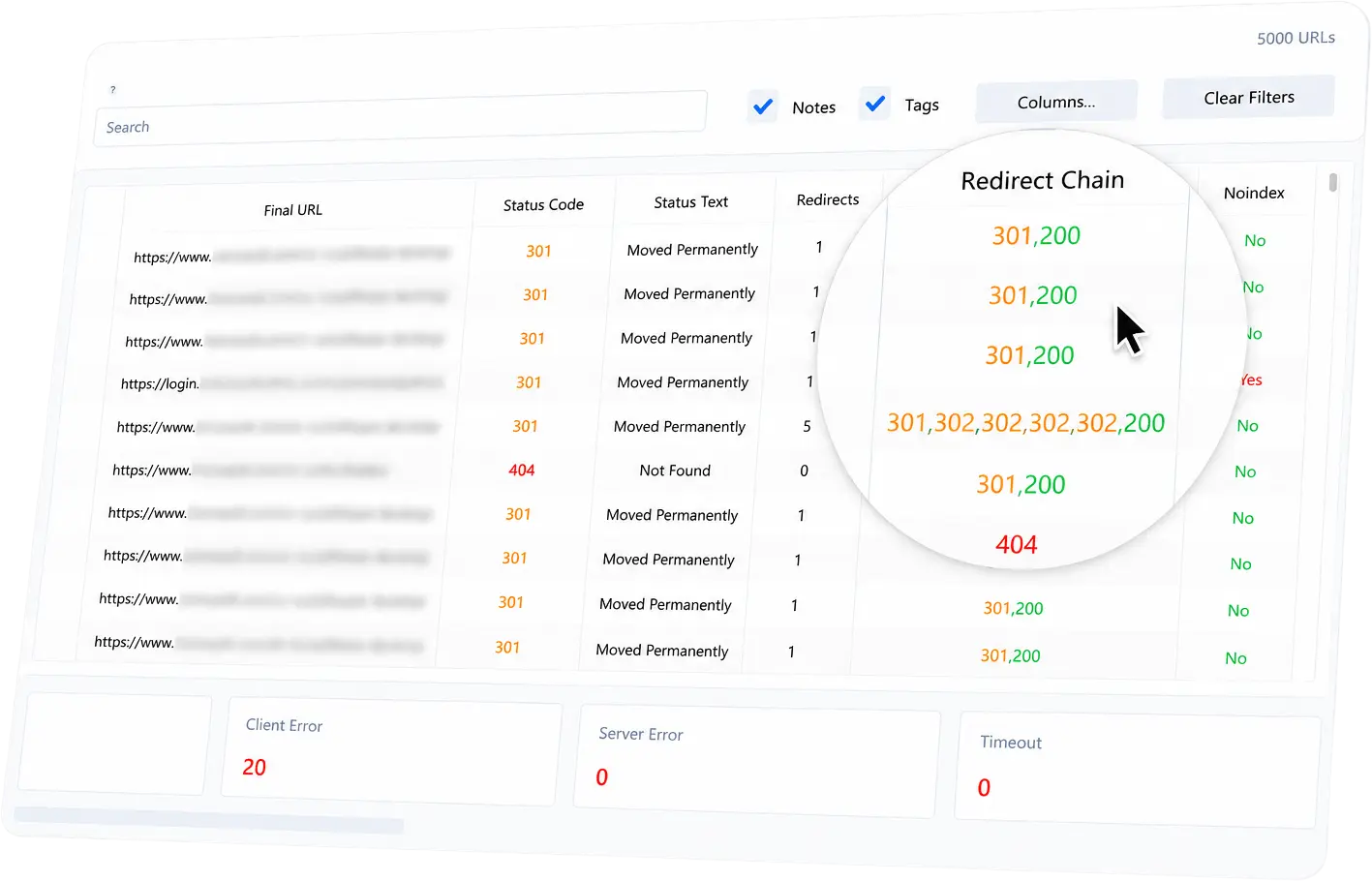
CSV files are one of the most common sources for URL audits. They can come from a CMS export, redirect map, analytics report, backlink export, ecommerce platform, sitemap export, search console export or an internal spreadsheet.
The problem is that CSV files are rarely perfect. They often include extra columns, duplicate URLs, inconsistent schemes, old domains, tracking parameters, notes, empty rows and URLs mixed with other data. A good bulk URL checker for Windows should let you turn that file into a useful scan list without rebuilding the audit by hand.
URL Verifier Pro can import URLs from CSV files, scan them in bulk and report status codes, final URLs, redirect chains, metadata, headers and errors.
When to use a CSV import
Use a CSV import when your URL list already exists in spreadsheet form.
Typical examples include:
-
Old URL lists for website migrations.
-
Product URLs exported from ecommerce platforms.
-
Landing pages from analytics.
-
Top pages from Search Console.
-
Backlink target URLs.
-
CMS page exports.
-
QA lists from developers.
-
Redirect mapping spreadsheets.
-
Client URL inventories.
If the file is already part of the project workflow, importing the CSV keeps the audit traceable.
Before you import
A few checks before importing can save time later.
Review the file and confirm:
-
The URLs are in a consistent column.
-
The file does not include private or unnecessary data.
-
The URLs belong to the site or project you intend to check.
-
The list does not include staging URLs by accident.
-
The file is saved as CSV, not a formatted spreadsheet file.
-
You know whether the URLs include
http://orhttps://.
You do not need to make the file perfect, but you should know what the CSV represents before you scan it.
Recommended workflow
-
Open URL Verifier Pro.
-
Import the CSV file or paste the URL column into the Add URLs window.
-
Review the URL count before scanning.
-
Confirm whether missing-scheme normalization is enabled if your file includes entries like
example.com/page. -
Run the scan.
-
Filter failed, redirected, blocked,
4xxand5xxrows first. -
Review final URLs and redirect chains for anything unexpected.
-
Add notes or tags for rows that need follow-up.
-
Export a focused CSV report using only the visible columns you need.
For a general status code workflow, see How to Bulk Check HTTP Status Codes.
CSV imports for migrations
For migration work, your CSV may include old URLs, expected new URLs, status notes or priority information. URL Verifier Pro scans the URLs it imports, but it does not replace a full redirect mapping spreadsheet.
A practical approach is:
-
Import the old URL column.
-
Scan the list.
-
Review Final URL, Status Code, Redirect Count and Redirect Chain.
-
Add notes where the final destination is wrong.
-
Tag rows such as
wrong destination,chain,loop,missing redirectorneeds review. -
Export the filtered redirect issues.
If the redirect mapping spreadsheet has an expected destination column, keep that file as your source of truth and use the URL Verifier Pro export as your QA evidence.
Useful columns for CSV based URL checks
For most CSV imports, start with:
-
Original URL
-
Final URL
-
Scan status
-
Status code
-
Status text
-
Redirect count
-
Redirect chain
-
Response time
-
Content type
-
Error details
-
Notes
-
Tags
If the file is for an SEO audit, also include:
-
Page title
-
Meta description
-
Canonical URL
-
Noindex flag
-
Nofollow flag
-
Hreflang alternates
-
Open Graph title
If the file is for a developer or QA report, also include:
-
Server header
-
Cache-Control header
-
Location header
-
Content length
-
Response headers where relevant
Common CSV problems
Duplicate URLs
Duplicate URLs are common in exports from multiple systems. Removing duplicates keeps the audit cleaner and avoids wasting scan time.
Missing schemes
Some files contain example.com/page instead of https://example.com/page. If missing-scheme normalization is enabled, URL Verifier Pro can normalize these entries before scanning.
Mixed domains
CSV files sometimes include multiple domains, old staging hosts or third-party links. Search or filter the imported list before scanning if you only want one domain.
Tracking parameters
Analytics exports may include query strings and campaign parameters. Decide whether those parameterized URLs need checking or whether they should be cleaned before import.
Non-page assets
CSV files may include PDFs, images or downloads. URL Verifier Pro can still check them as URLs, but metadata extraction is only useful for HTML pages.
Reporting from a CSV import
When you export results, do not send every column to every stakeholder.
Use a focused report:
-
Developers usually need status code, final URL, redirect chain and error details.
-
SEO teams may need canonicals, metadata, robots signals and noindex flags.
-
Clients may need a short list of issues, notes and recommended actions.
-
Migration teams usually need old URL, final URL, redirect count and redirect chain.
The guide How to Export URL Audit Results to CSV covers report structure in more detail.
Final checklist
Before you finish the audit, confirm:
-
The right CSV file was imported.
-
The scan completed or any failed rows were reviewed.
-
Redirect chains were checked, not just final status codes.
-
Important rows have notes or tags.
-
The exported report includes only the columns needed.
-
Any sensitive URLs or internal notes are safe to share.
A CSV import is not just a way to load URLs. It is often the starting point for a repeatable audit workflow.