

How to Bulk Check HTTP Status Codes
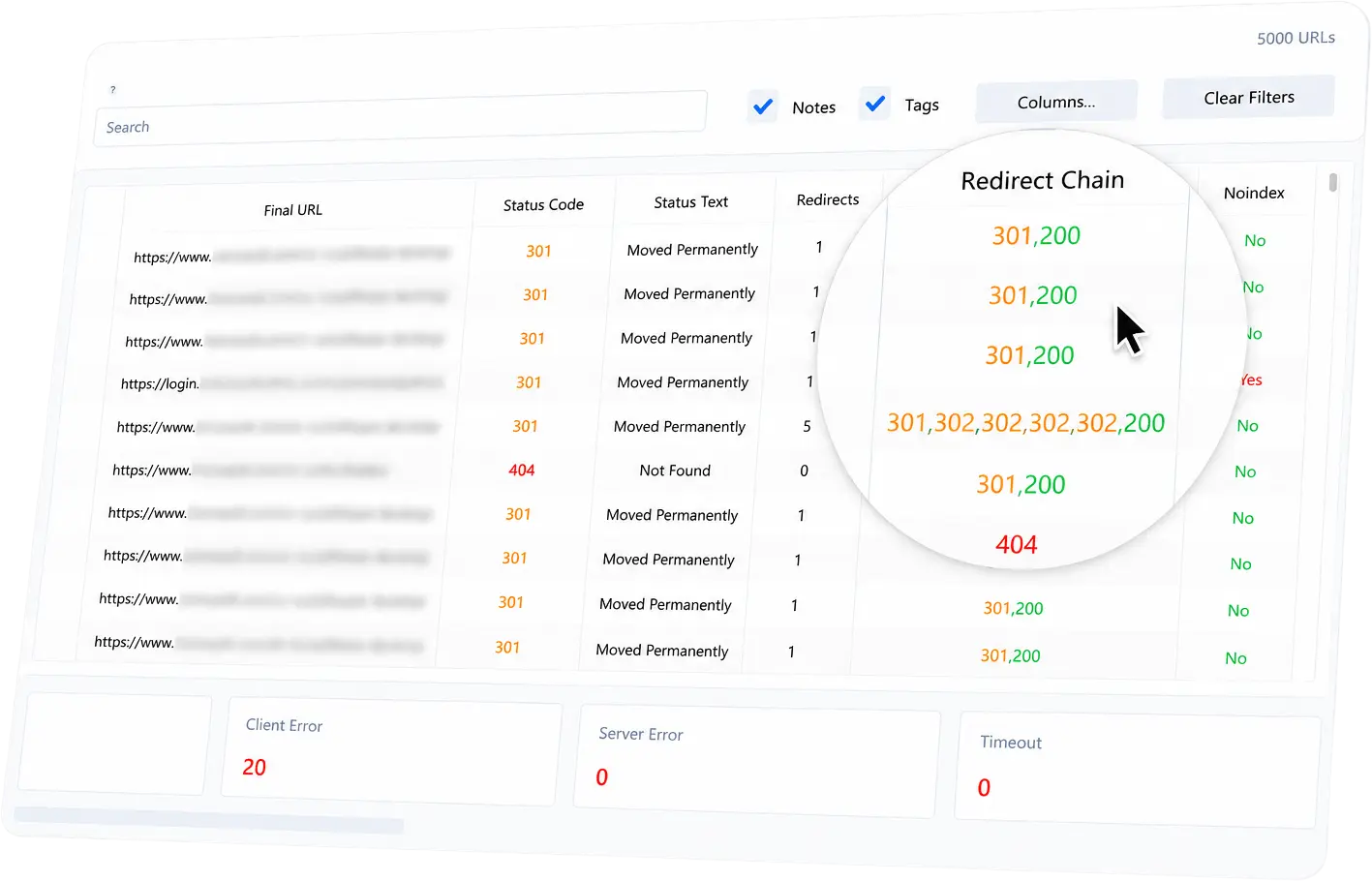
Bulk HTTP status checking helps you quickly understand which URLs are working, redirecting, broken, blocked or returning server errors. It is one of the most useful checks for technical SEO audits, website migrations, QA testing, sitemap reviews, content cleanups and routine website maintenance.
The bulk URL status checker in URL Verifier Pro lets you check large URL lists from your Windows desktop. You can paste URLs, import TXT or CSV files, or discover URLs from a domain, website URL or XML sitemap. Once your list is ready, the app scans each URL and gives you a clear table of status codes, final URLs, redirect chains, response times, content types, headers and errors.
Basic workflow
-
Prepare your URL list from a sitemap, crawl export, analytics report, redirect map, CMS export, spreadsheet or manual list.
-
Add the URLs to URL Verifier Pro by pasting them, importing a TXT/CSV file, or using sitemap discovery.
-
Review the URL list before scanning and remove anything you do not want to check.
-
Adjust scan settings if needed, including timeout, redirect limit, concurrency, per-host concurrency, retries, delay, jitter, robots.txt handling, User-Agent, cookies, Basic Authentication or proxies.
-
Start the scan and let URL Verifier Pro process the list in the background while the interface stays responsive.
-
Review the results grid and focus on the columns that matter for your audit.
-
Filter by scan status, HTTP status code or content type to find problem URLs faster.
-
Show or hide columns so the table contains only the data you need.
-
Export the results to CSV, using either all rows or only the filtered rows.
Useful columns to review
For most status code audits, these columns are especially useful:
-
Original URL
-
Final URL
-
Scan status
-
HTTP status code
-
HTTP status text
-
Redirect count
-
Redirect chain
-
Response time
-
Content type
-
Content length
-
Server header
-
Cache-Control header
-
Location header
-
Robots status
-
Error details
What to look for
A 200 OK response usually means the URL returned successfully.
A 301 or 308 usually indicates a permanent redirect. Check the final URL and make sure the destination is correct.
A 302 or 307 usually indicates a temporary redirect. These may be intentional, but they are worth reviewing during migrations and canonical URL checks.
A 404 means the page was not found. A 410 means the page has been intentionally removed.
A 403 can indicate blocked access, permission rules, bot protection or server configuration. A 429 usually means the server is rate limiting requests.
A 500 or 503 points to a server-side problem and should be investigated, especially if it affects important pages.
Failed rows may be caused by DNS errors, connection timeouts, TLS problems, proxy failures, redirect loops or rejected requests. The Error column usually gives more detail.
Practical use cases
Bulk status checks are useful when you need to:
-
Find broken URLs before sending a client report.
-
Check whether an XML sitemap contains dead, redirected or blocked pages.
-
Validate old URLs after a website migration.
-
Confirm that important URLs return the expected status code.
-
Compare final URLs against expected destination URLs.
-
Export a clean CSV report for developers, content teams or clients.
Important note
URL Verifier Pro is not a browser and does not execute JavaScript. It performs direct HTTP requests, which keeps scans fast and focused on technical URL checks. Some websites may respond differently to a direct HTTP request than they do in Chrome or Edge, especially if they rely heavily on cookies, browser sessions or JavaScript-rendered content.