

How to Check Response Headers in Bulk
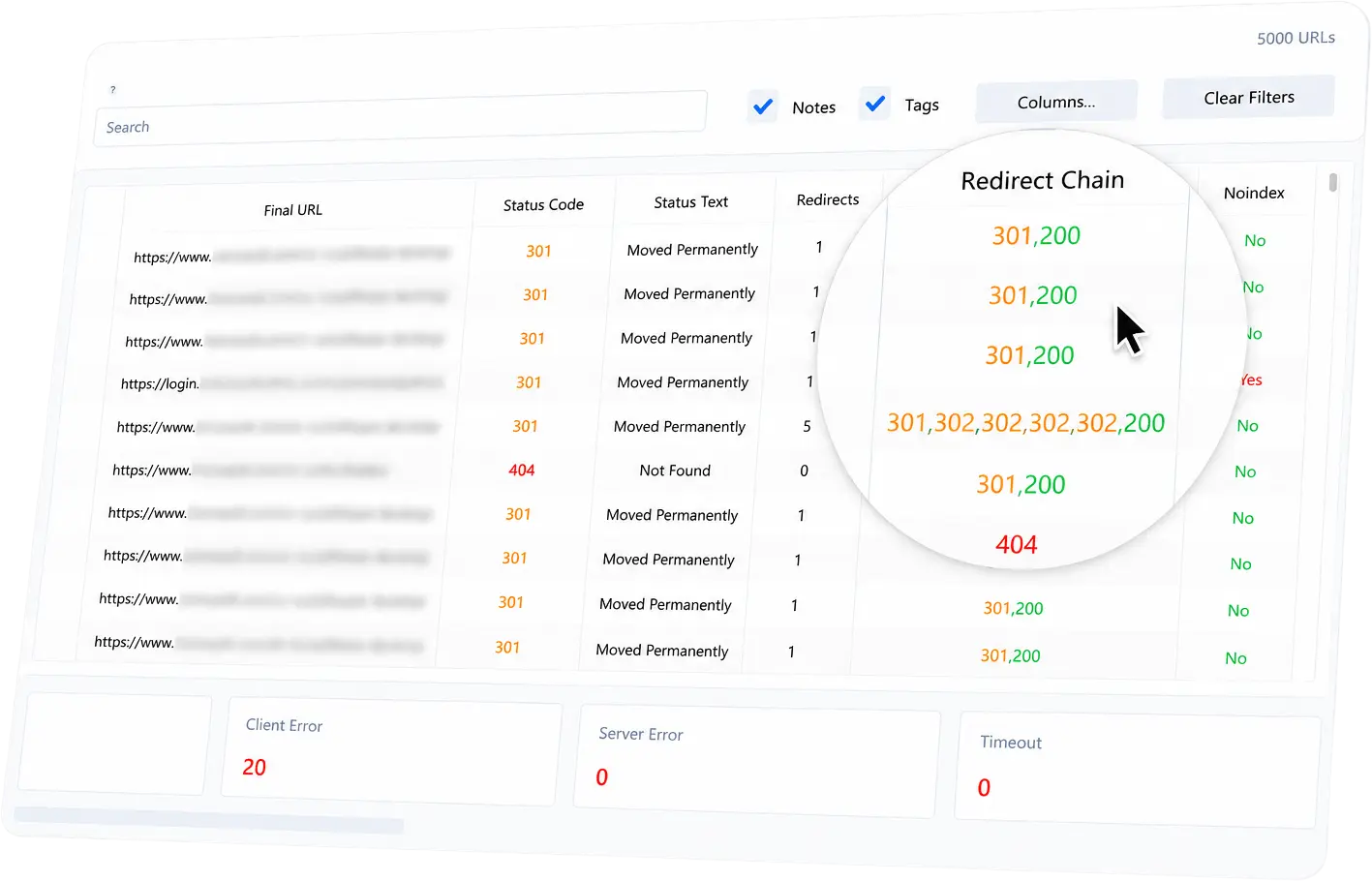
Response headers explain how a server handled a request. They can reveal redirects, cache rules, content types, robots directives, security policies, compression, server details and CDN behaviour.
For technical SEO, migrations and QA, header checks are often just as useful as the visible page content. A URL can return 200 OK but still have a bad cache rule, wrong content type, missing security header or an unexpected X-Robots-Tag.
URL Verifier Pro can capture common response headers during scans and also fetch live headers for selected rows.
When header checks are useful
Check response headers when you need to review:
-
Redirect Location headers.
-
Cache-Control rules.
-
Content-Type mismatches.
-
Content-Length changes.
-
Server or CDN behaviour.
-
X-Robots-Tag directives.
-
HSTS and security policies.
-
Compression settings.
-
Staging or protected URL responses.
-
Differences between templates or sections.
For status code basics, see How to Bulk Check HTTP Status Codes.
Headers worth reviewing
Location
The Location header shows where a redirect points. It is essential for redirect audits.
Cache-Control
Cache-Control helps explain whether pages are cached, revalidated or not stored. It is useful for QA, ecommerce and release checks.
Content-Type
Content-Type tells you whether a URL returned HTML, PDF, image, JSON, XML or another type. This helps separate page URLs from asset URLs.
Content-Length
Content-Length can help spot unusual responses, empty bodies or unexpected changes, although it should not be treated as a full content comparison.
Server
The Server header may reveal the web server, platform, CDN or proxy layer involved.
X-Robots-Tag
X-Robots-Tag can apply robots directives from headers, not just HTML. This matters for PDFs, images and other non-HTML resources too.
Strict-Transport-Security
HSTS tells browsers to use HTTPS for future requests. It is useful for HTTPS and security QA.
Content-Security-Policy
CSP can affect scripts, images, frames and other resources. It is primarily a security header, but it can also explain broken site behaviour after deployment.
Recommended workflow
-
Import or discover your URL list.
-
Run the scan.
-
Show the header columns relevant to your audit.
-
Filter by status code, content type or tag.
-
Sort or search for unexpected values.
-
Use live header lookup for rows that need deeper inspection.
-
Add notes for header issues that need developer review.
-
Export a focused CSV report.
Use cases
Redirect QA
Show:
-
Original URL
-
Status code
-
Location header
-
Final URL
-
Redirect chain
-
Redirect count
This helps confirm whether redirect rules are sending users to the expected destination.
Cache review
Show:
-
Original URL
-
Status code
-
Cache-Control
-
ETag
-
Last-Modified
-
Age
-
Content-Encoding
This helps identify pages that are unexpectedly cached, not cached or stale.
Robots header review
Show:
-
Original URL
-
Status code
-
Content-Type
-
X-Robots-Tag
-
Noindex flag
-
Robots status
This is especially useful for PDFs, documents and non-HTML resources.
Security header check
Show:
-
Strict-Transport-Security
-
Content-Security-Policy
-
Referrer-Policy
-
Permissions-Policy
-
X-Frame-Options
-
X-Content-Type-Options
URL Verifier Pro is not a full security scanner, but these fields can help QA common header presence across URL lists.
Common issues
Look for:
-
Redirects with unexpected Location values.
-
HTML pages served with the wrong Content-Type.
-
Important pages with no-cache rules that should be cached.
-
Private pages being cached publicly.
-
X-Robots-Tag noindex on important resources.
-
Missing or inconsistent HSTS across HTTPS pages.
-
Different headers between staging and production.
-
Server errors with unusually short or unexpected responses.
Reporting tips
Keep header reports focused. A full header export can become hard to read quickly.
Use tags such as:
-
cache review -
wrong content type -
x-robots review -
location issue -
security header -
staging header -
developer review
If headers explain why a URL behaves differently in the app than in a browser, link the report back to Why a URL Works in Your Browser but Fails in a URL Checker.
Final advice
Headers are best reviewed with context. Always compare them with status code, final URL, content type and redirect chain. A single header rarely tells the whole story, but it often explains where to investigate next.