

Why a URL Works in Your Browser but Fails in a URL Checker
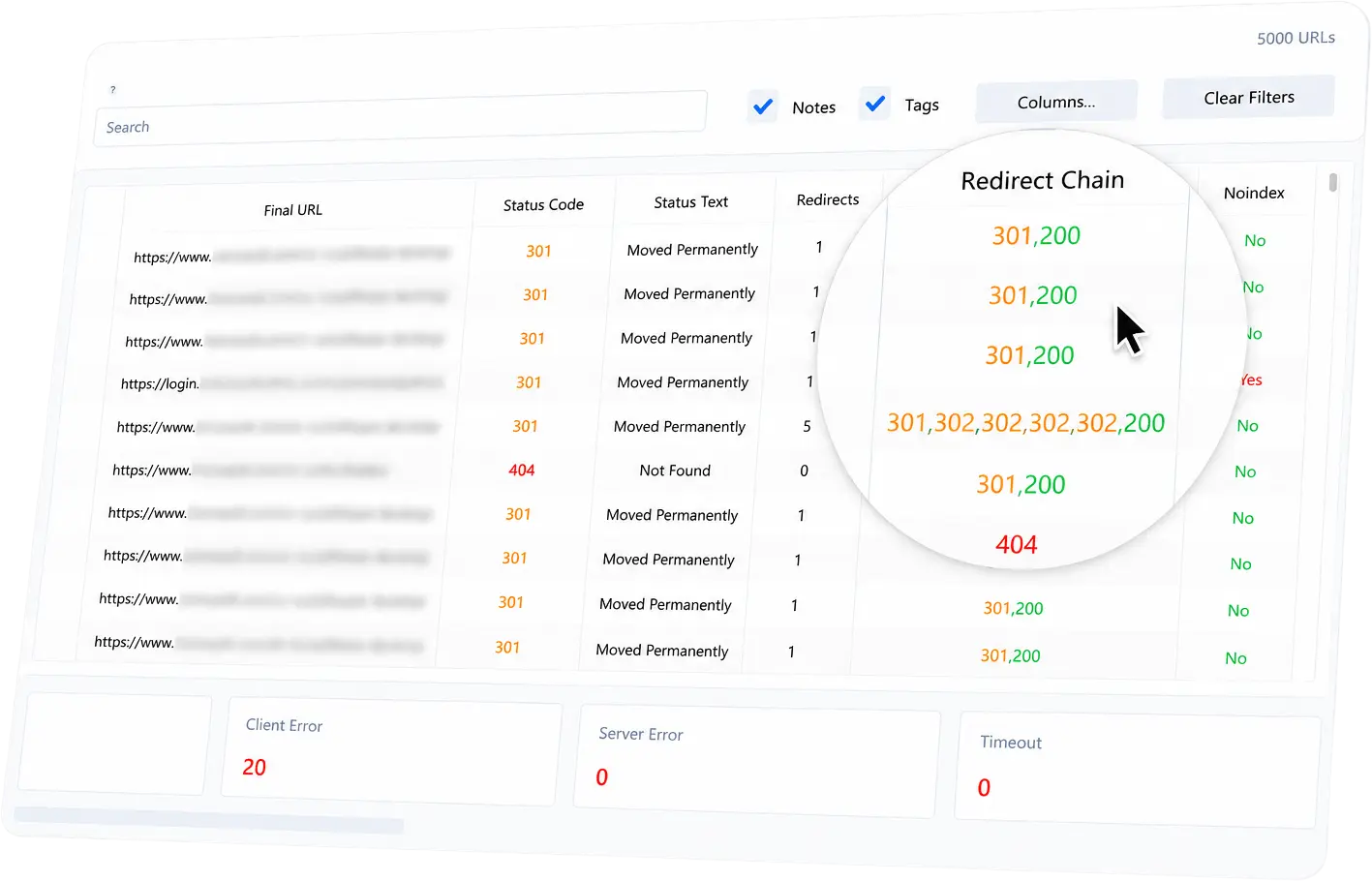
It is common for a URL to work in a browser but fail in a bulk URL status checker that sends direct HTTP requests. That does not automatically mean the checker is wrong. Browsers and URL checking tools behave differently.
URL Verifier Pro performs direct HTTP requests. It does not render pages, execute JavaScript, solve interactive challenges or reuse your browser session unless you configure cookies or authentication yourself.
What browsers do
Browsers can:
-
Execute JavaScript.
-
Store cookies and sessions.
-
Send browser-specific headers.
-
Render pages visually.
-
Follow complex authentication flows.
-
Use an existing logged-in session.
-
Allow a human to complete some challenges manually.
What URL Verifier Pro does
-
Sends direct HTTP requests.
-
Follows redirects up to your configured limit.
-
Records status codes, final URLs, headers and redirect chains.
-
Extracts metadata from the HTML response where available.
-
Does not execute JavaScript.
-
Does not solve interactive bot challenges.
Common reasons for different results
A URL may behave differently because:
-
The site requires cookies or login.
-
The site blocks automated requests.
-
The server rate limits frequent requests.
-
A firewall, CDN or bot protection service returns a
403,429or challenge page. -
The URL redirects differently based on User-Agent.
-
TLS issues are handled differently by the browser and the scanner.
-
A proxy fails or changes the request.
-
The visible page depends on JavaScript rendering.
Troubleshooting steps
-
Check the status code and Error column.
-
Review response headers for server, cache, location, block or challenge indicators.
-
Try a built-in browser User-Agent preset or a custom User-Agent where appropriate.
-
Add cookies or HTTP Basic Authentication for staging or protected pages.
-
Reduce concurrency and per-host concurrency.
-
Add request delay, jitter or backoff if the site is rate limiting.
-
Check proxy settings or disable proxies.
-
Use live header lookup from a selected row.
-
Use live TLS certificate details for HTTPS issues.
-
Review the original URL, final URL and redirect chain.
How to report this
Separate true broken URLs from blocked or inconclusive URLs. Tags such as blocked, needs auth, proxy issue, rate limited, browser-only or retry later can help keep the report clear.