

How to Audit Sitemap Indexes and Nested Sitemaps
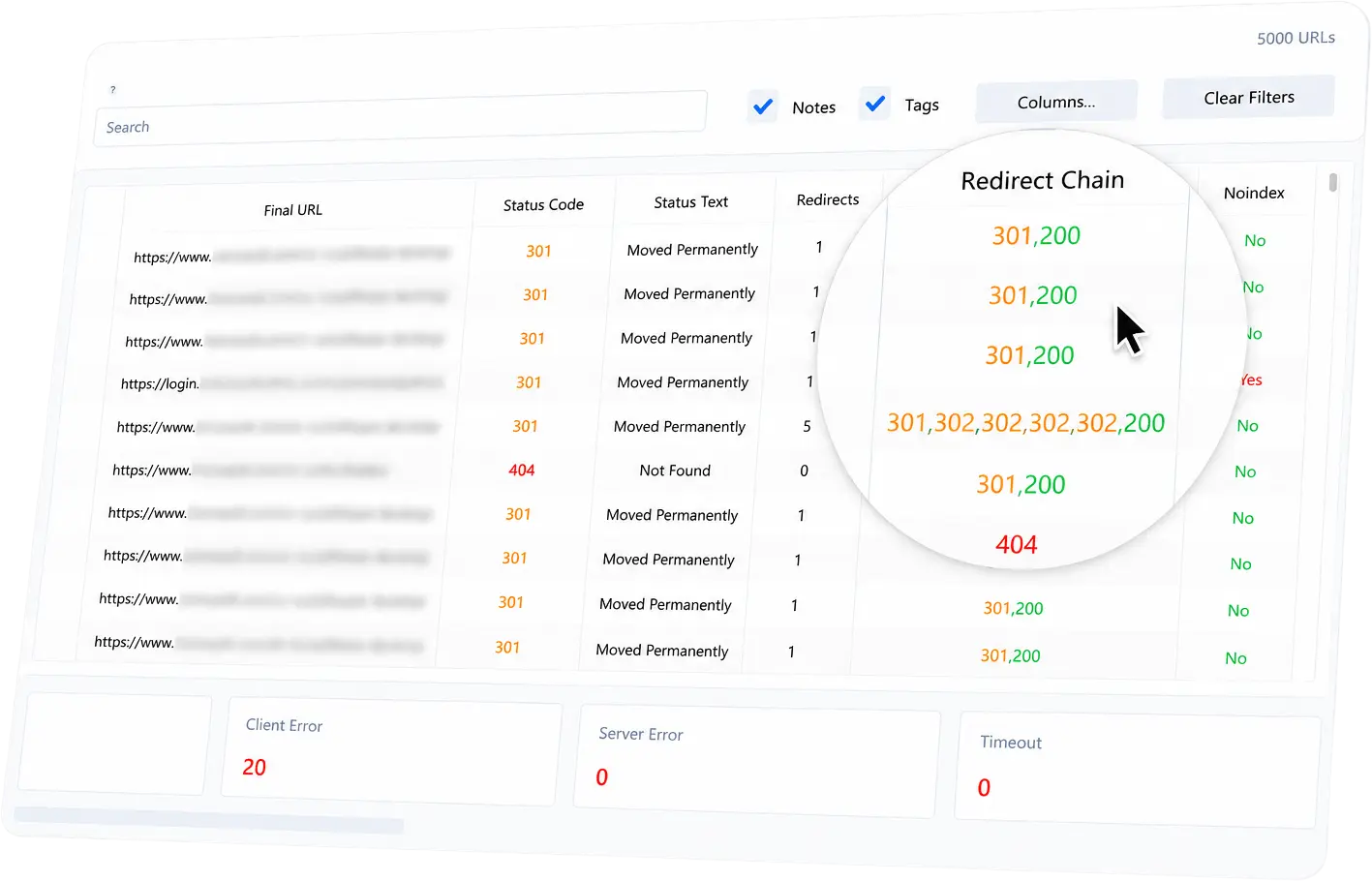
Large sites often use sitemap indexes instead of a single XML sitemap. A sitemap index points to other sitemaps, and those sitemaps contain the page URLs. Some sites also use nested sitemap structures where one index leads to another index before the final URL sitemaps are found.
That structure is normal, but it can hide problems. Old sitemap files, dead child sitemaps, redirected sitemap URLs, blocked sitemap requests and noindex URLs can all sit inside the sitemap structure without being obvious.
URL Verifier Pro can discover sitemap URLs from a root domain, robots.txt, common sitemap locations, direct sitemap URLs and sitemap indexes. It can also follow nested sitemap structures up to your configured limits.
For broken URL checks inside sitemaps, see How to Find Broken URLs From an XML Sitemap.
What a sitemap index is
A sitemap index is an XML file that lists other sitemap files. It is commonly used when:
-
A site has many URLs.
-
URLs are split by section or content type.
-
Ecommerce products and categories are separated.
-
Blog posts, pages, media and taxonomy URLs are separated.
-
A CMS or SEO plugin generates multiple sitemap files.
A sitemap index is not the same as crawling the website. It only lists sitemap files. URL Verifier Pro uses sitemap files to find URLs rather than following links from page to page.
Why sitemap structure matters
A sitemap index can look fine at the top level while child sitemaps contain problems.
Common issues include:
-
Sitemap index points to old child sitemap URLs.
-
Child sitemap returns
404. -
Child sitemap redirects.
-
Some child sitemaps are blocked.
-
A sitemap contains old domain URLs.
-
Sitemaps include noindex URLs.
-
Sitemaps include redirected URLs.
-
Sitemap discovery stops because of depth or URL limits.
-
Multiple sitemap files contain duplicates or outdated sections.
Recommended workflow
-
Enter the root domain, website URL, robots.txt URL, direct sitemap URL or sitemap index URL.
-
Let URL Verifier Pro discover available sitemap files.
-
Confirm the configured maximum URL count and sitemap depth are suitable for the audit.
-
Add discovered URLs to the scan list.
-
Run the scan.
-
Filter redirects, broken URLs, failed rows, noindex rows and blocked rows.
-
Review sections or patterns with repeated issues.
-
Export a focused sitemap audit report.
Choosing limits
Large sitemap structures can contain hundreds of thousands of URLs. Before discovery, decide what you need to audit.
Use limits when:
-
You only need a sample.
-
You are checking a client issue quickly.
-
You want to avoid huge scans.
-
You are testing discovery behaviour.
-
The sitemap contains more URLs than the current audit needs.
Increase limits when:
-
You are performing a full migration QA.
-
You need complete sitemap coverage.
-
You are auditing large ecommerce or publishing sites.
-
You need evidence for all listed URLs.
What to check after discovery
Once the URLs are added and scanned, review:
-
URLs returning
3xx. -
URLs returning
4xx. -
URLs returning
5xx. -
Failed rows.
-
Not Allowed rows.
-
Noindex pages.
-
Canonicals pointing elsewhere.
-
Unexpected content types.
-
Slow responses.
-
Patterns by folder, language, product type or template.
The value is not just finding one broken URL. It is finding repeated patterns across sitemap sections.
Useful columns
For sitemap index audits, use:
-
Original URL
-
Final URL
-
Status code
-
Redirect chain
-
Robots status
-
Page title
-
Canonical URL
-
Noindex flag
-
Content type
-
Response time
-
Error details
-
Notes
-
Tags
For a more technical sitemap review, include response headers and server information too.
Suggested tags
Use tags to group issues by sitemap section or action:
-
sitemap 404 -
sitemap redirect -
sitemap noindex -
old domain -
wrong section -
blocked -
needs removal -
needs redirect -
review sitemap
How to report sitemap structure issues
Separate sitemap structure issues from page URL issues.
For example:
-
Child sitemap unavailable.
-
URL listed in sitemap returns 404.
-
URL listed in sitemap redirects.
-
URL listed in sitemap is noindex.
-
URL listed in sitemap canonicalises elsewhere.
Those are different problems and usually need different fixes.
Final advice
Do not treat a sitemap as a perfect source of truth. Treat it as a published URL inventory that needs checking. Sitemap indexes and nested sitemaps are useful because they help you find URLs quickly, but the scan results tell you whether those URLs are still useful, reachable and suitable for inclusion.