

How to Find Broken URLs From an XML Sitemap
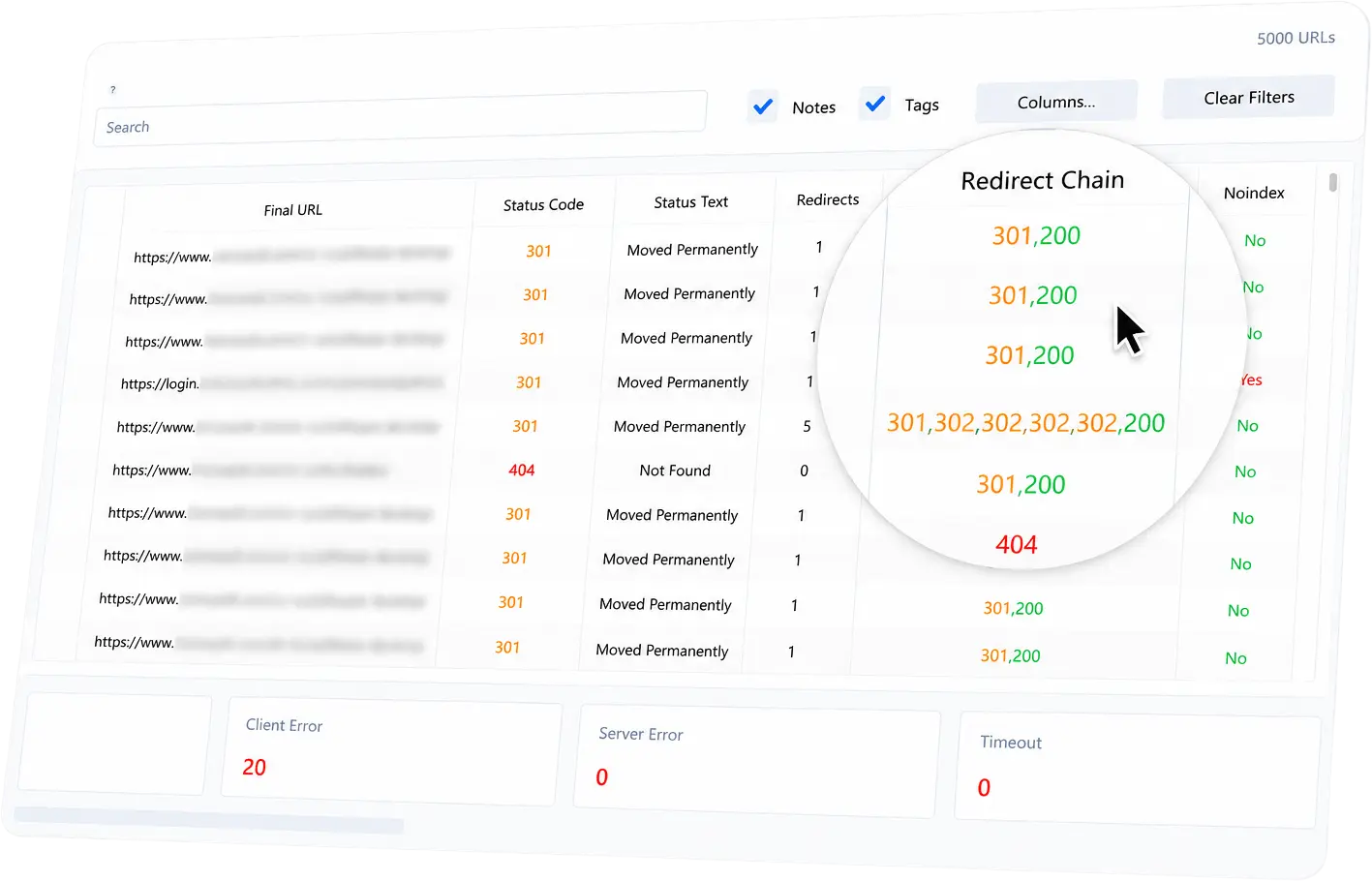
XML sitemaps should usually contain useful, indexable, canonical URLs. In practice, sitemaps often include redirected pages, old URLs, broken pages, server errors, noindex pages or URLs blocked by robots rules. Checking sitemap URLs is a fast way to find site health issues without crawling the entire website.
URL Verifier Pro can discover URLs from a root domain, website URL, direct sitemap URL or robots.txt URL. It checks robots.txt for sitemap declarations, falls back to common sitemap locations such as /sitemap.xml, parses sitemap indexes and supports nested sitemap structures.
Sitemap audit workflow
-
Enter the site root, website URL, direct sitemap URL or robots.txt URL.
-
Let URL Verifier Pro discover available XML sitemaps.
-
If the site uses sitemap indexes or nested sitemap indexes, let the app follow them up to your configured limits.
-
Apply a maximum URL count if you want to keep the audit focused.
-
Add the discovered URLs to your URL list.
-
Run the scan.
-
Filter for broken, redirected, blocked or unexpected results.
-
Export the issues to CSV.
What to check in sitemap results
A 200 OK response usually means the sitemap URL is reachable.
Sitemap URLs returning 301, 302, 307 or 308 should be reviewed. XML sitemaps should normally list final canonical URLs rather than redirecting URLs.
A 404 or 410 usually means the URL should be removed from the sitemap or redirected if it still has value.
A 500 or 503 suggests a server-side issue that may need investigation.
A 403 or 429 may indicate access rules, bot protection, rate limiting or security software.
Noindex pages in a sitemap should be reviewed. If a page is intentionally noindex, it may not belong in the XML sitemap.
Canonical URLs are also worth checking. If a sitemap URL canonicalises to another page, the sitemap may need to be updated.
Useful columns for sitemap audits
Consider showing these columns before exporting:
-
Original URL
-
Final URL
-
Status code
-
Redirect chain
-
Robots status
-
Page title
-
Meta description
-
Canonical URL
-
Noindex flag
-
Nofollow flag
-
Hreflang alternates
-
Response headers
-
Error details
If discovery stops early
Sitemap discovery can stop because it reached the configured URL limit, reached the configured depth limit, found invalid sitemap data, was blocked by the server or was cancelled. If optional scan logging is enabled, discovery details can help explain what happened.
For reporting, keep the export focused. Filter for 3xx, 4xx, 5xx, Failed, Not Allowed, noindex or canonical review rows, then export only the columns the recipient needs.