

How to Organise URL Audits With Notes, Tags and Saved Sessions
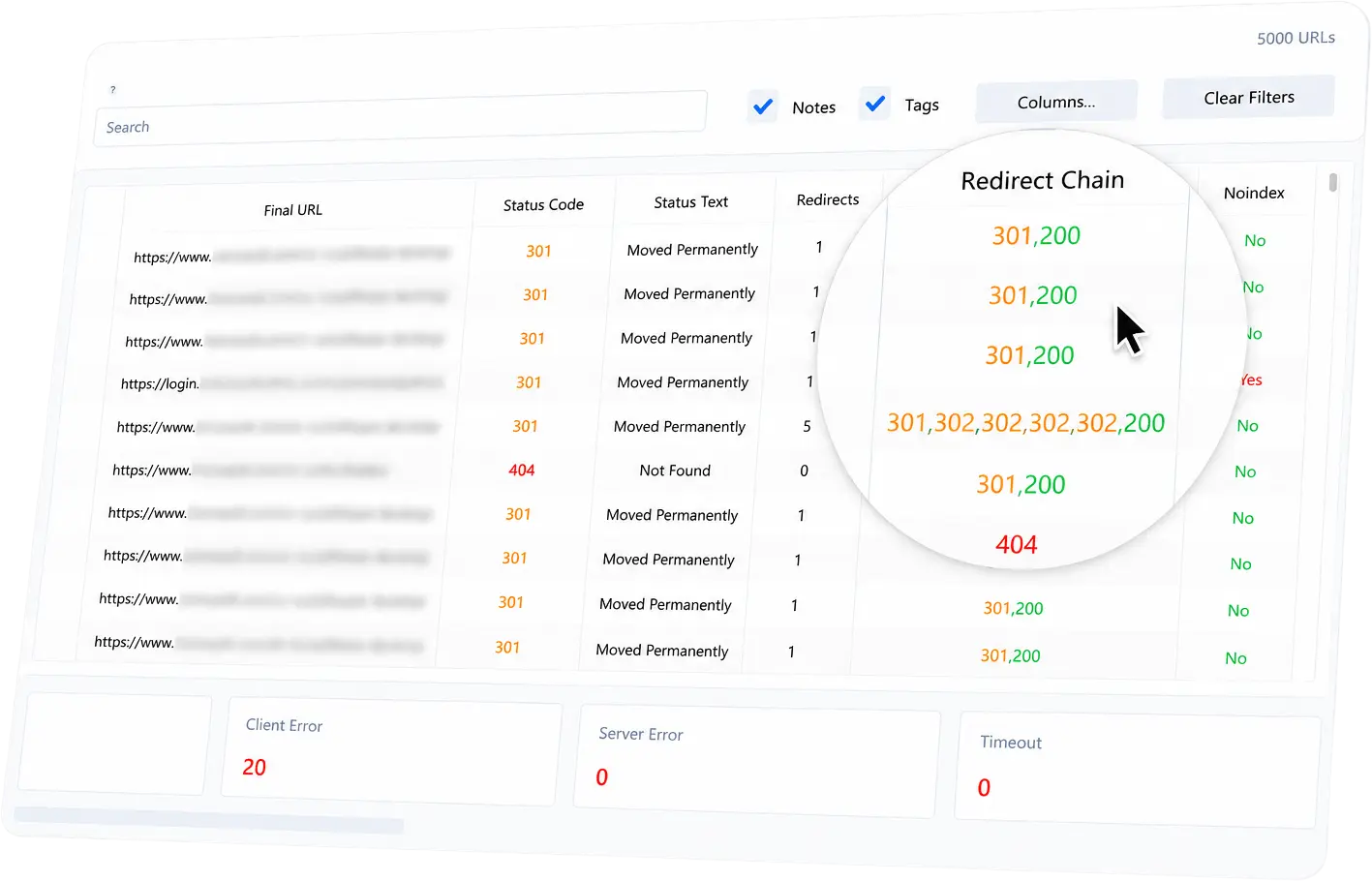
Large URL audits are easier to manage when you can organise results as you work. Without notes, tags and saved sessions, an audit can quickly turn into a spreadsheet full of URLs with no context, ownership or decision history.
URL Verifier Pro lets you add notes to rows, create custom colour-coded tags, filter by tag and save sessions so you can return to the same audit later. During migration work, combine that organisation with a bulk redirect check to keep wrong destinations, chains and unresolved rows grouped for follow-up.
Use notes for row-specific context
Notes are useful when a URL needs explanation. For example, you can use notes to:
-
Explain why a URL is important.
-
Record the expected destination URL.
-
Mention who needs to fix the issue.
-
Add investigation notes.
-
Mark decisions such as
ignore,expected,redirect target approvedorneeds content review.
Use custom tags for workflow
Tags help group rows by issue type, owner, priority or status. Common tag examples include:
-
priority -
migration -
broken -
redirect review -
wrong destination -
blocked -
needs auth -
content team -
developer -
fixed -
ignore
Because tags are colour-coded and filterable, they are especially useful in large scans where different teams need different subsets of the results.
Save sessions for ongoing audits
Session files preserve your URL list, scan results, notes, tags and relevant session data. This means you can pause an audit, reopen it later and continue without rebuilding the list from scratch.
This is useful for migrations, client reviews, long-running audits and follow-up checks after developers make fixes.
Example audit workflow
-
Import a URL list.
-
Run a scan.
-
Filter
4xxresults and tag them asbroken. -
Filter redirects and tag questionable rows as
redirect review. -
Add notes to rows that need explanation.
-
Save the session.
-
Export filtered CSV reports for each team.
-
Reopen the session after fixes are made.
-
Rescan selected URLs, failed rows or unprocessed rows.
-
Update tags and notes based on the new results.
Why this matters
A scan result tells you what happened. Notes, tags and sessions help you decide what to do next. They turn URL verification from a one-off export into a repeatable audit workflow.