

How to Find and Fix Incorrect Pages Found in Sitemap.xml
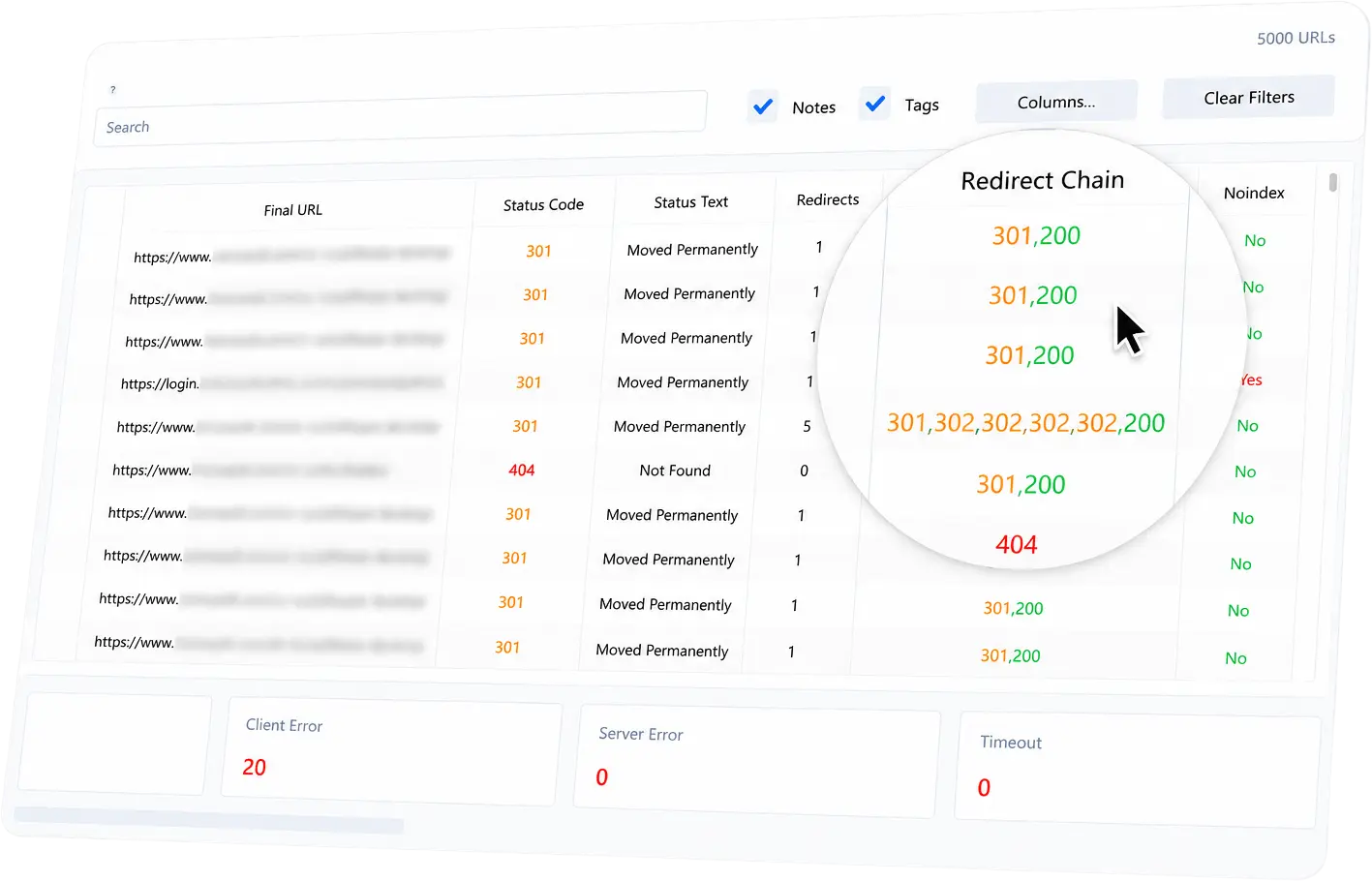
The "incorrect pages found in sitemap.xml" warning means that one or more URLs listed in your XML sitemap may not be suitable for search engines to index.
This warning is commonly reported by SEO audit tools such as Semrush. It does not usually mean that the XML file itself is malformed. Instead, the sitemap may contain URLs that redirect, return an error, point to another canonical URL or otherwise conflict with the version of the page you want search engines to use.
The sitemap URL checker in URL Verifier Pro can discover the URLs in your sitemap, check their live responses and organise the results into a practical fix list. This is useful for anything from a small website to sitemap indexes containing hundreds of thousands or millions of URLs.
What does "incorrect pages found in sitemap.xml" mean?
An XML sitemap should provide a clean list of the preferred URLs you want search engines to discover and consider for search results.
A URL may be reported as incorrect when it:
-
Redirects to a different URL.
-
Returns a
4xxclient error such as404 Not Foundor410 Gone. -
Returns a
5xxserver error. -
Is a duplicate or non-canonical version of another page.
-
Declares a canonical URL that points somewhere else.
During the same sitemap review, it is also sensible to look for:
-
Pages with a
noindexdirective. -
URLs blocked by robots.txt.
-
HTTP URLs on an HTTPS website.
-
Incorrect
wwwor non-wwwversions. -
Old staging, preview or development URLs.
-
URL variations caused by parameters, trailing slashes or inconsistent letter case.
A 200 OK response is a good starting point, but it does not automatically mean a URL belongs in the sitemap. The page should also represent the preferred canonical URL and be one you genuinely want available in search results.
Why incorrect sitemap pages should be fixed
A sitemap is most useful when it contains current, canonical and indexable URLs. It should not become a history of old addresses, redirects and deleted pages.
Leaving incorrect pages in a sitemap can:
-
Send search engines to URLs that immediately redirect elsewhere.
-
Create conflicting signals between sitemap entries and canonical tags.
-
Keep deleted or broken URLs in submitted sitemap reports.
-
Make genuine indexing problems harder to identify.
-
Cause old HTTP,
www, non-wwwor staging URLs to remain discoverable. -
Make sitemap coverage reports less useful for SEO and development teams.
This does not mean that one redirected URL will suddenly damage a website. The aim is to keep the sitemap accurate, consistent and easy to trust.
How URL Verifier Pro helps find incorrect sitemap pages
URL Verifier Pro is designed to check known URL lists rather than crawl every internal link on a website. That makes it well suited to this task because it can audit the exact URLs declared in your sitemap.
It can help you:
-
Discover sitemaps from a root domain, website URL or direct sitemap URL.
-
Follow sitemap indexes and nested child sitemaps.
-
Display complex sitemap structures in Sitemap Explorer.
-
Check HTTP status codes and request errors.
-
Follow redirects and show the final URL, final status and redirect sequence.
-
Extract canonical URLs and highlight values that differ from the final URL.
-
Show meta robots directives, including
noindexandnofollow. -
Apply robots.txt rules and identify URLs marked as Not Allowed.
-
Filter, sort, search, tag and add notes to affected rows.
-
Export a focused CSV fix list using only the rows and columns you need.
-
Save the session and rescan affected URLs after corrections are made.
Recommended workflow
1. Discover the sitemap URLs
Open URL Verifier Pro and enter one of the following:
-
The website's root domain.
-
A full website URL.
-
A direct sitemap URL such as
https://example.com/sitemap.xml. -
A sitemap index URL.
Select Discover. URL Verifier Pro checks robots.txt sitemap declarations and common sitemap locations, then follows sitemap indexes and nested child sitemaps.
For large sites, review the configured sitemap depth and URL limits before discovery. URL Verifier Pro can work with very large projects, but the limits should match the size and structure of the site you are auditing.
2. Review the sitemap structure
Open Sitemap Explorer to see how the sitemap index, child sitemaps and individual URLs are organised.
This can be particularly useful when an incorrect URL is buried inside a large sitemap structure. You can locate the selected URL in the tree and identify which child sitemap supplied it, making it easier to trace the problem back to the correct CMS section, content type or sitemap generator.
3. Scan all discovered URLs
Start a scan of the discovered URL list. URL Verifier Pro will request each URL and record its response, redirects, final destination, metadata and any errors encountered.
For a sitemap audit, useful columns include:
-
URL
-
Status
-
Status Code
-
Status Text
-
Final URL
-
Final Status
-
Redirects
-
Redirect Chain
-
Canonical
-
Meta Robots
-
Noindex
-
Content Type
-
Meta Title
-
Error
-
Note
-
Tags
Keeping the relevant columns visible also produces a cleaner CSV export later.
4. Isolate the problem groups
Review the results in groups rather than checking rows one at a time.
Start with:
-
3xxstatus codes. -
4xxstatus codes. -
5xxstatus codes and failed requests. -
Canonical URLs that differ from the final URL.
-
Pages marked
noindex. -
URLs marked Not Allowed by robots.txt.
-
Unexpected domains, subdomains, protocols or environments.
Use filters, sorting and search to bring related issues together. Add notes where the expected result is not obvious and apply tags to record the required action.
How to fix each type of incorrect sitemap page
Redirected URLs
Example:
http://www.example.com/services → 301 → https://example.com/services/ → 200
The old URL may work for users because it redirects, but it should not normally remain in the sitemap. Replace it with the final preferred URL:
https://example.com/services/
Before changing the sitemap, confirm that the final URL returns 200 OK, is the intended destination and uses the correct canonical URL.
Do not remove a necessary redirect from the server simply because the old URL is being removed from the sitemap. The redirect may still be needed for visitors, backlinks and previously indexed URLs.
URLs returning 404 or 410
A 404 Not Found or 410 Gone response usually means the page no longer exists.
Choose the fix based on what should happen:
-
Restore the page if it was removed accidentally.
-
Correct the sitemap URL if it contains a typo or outdated path.
-
Remove the URL from the sitemap if the content has been permanently deleted.
-
Add a relevant permanent redirect if the content genuinely moved to a replacement page.
Do not redirect every deleted URL to the homepage. Use a close replacement when one exists. Otherwise, allow the deleted URL to return an appropriate not-found response and remove it from the sitemap.
URLs returning 5xx errors
A 5xx response indicates a server-side problem. The URL may still be valid, so removing it from the sitemap is not always the correct first action.
Investigate:
-
Application errors.
-
Database or upstream service failures.
-
Server overload.
-
Timeouts.
-
Firewall, CDN or security rules blocking the request.
-
Temporary maintenance responses.
After resolving the server issue, rescan the affected URLs. Keep them in the sitemap only when they reliably return the intended successful response.
Non-canonical URLs
A URL can return 200 OK but still declare a different canonical URL.
For example:
-
Sitemap URL:
https://example.com/product?ref=menu -
Canonical URL:
https://example.com/product/
If the canonical is correct, remove the parameter version from the sitemap and include the canonical URL instead.
If the sitemap URL is supposed to be the canonical page, correct the canonical tag or template so the signals agree.
URL Verifier Pro displays the canonical beside the original and final URLs, making these differences easier to review in bulk. A different canonical is evidence that needs review, not automatic proof that the page is wrong. Cross-domain canonicals, campaign pages and deliberate content consolidation may require a manual decision.
Noindex pages
A sitemap says that a URL is important enough to submit, while a noindex directive says that it should not appear in search results. These signals usually should not be combined.
Decide which intention is correct:
-
If the page should remain excluded from search, remove it from the sitemap.
-
If the page should appear in search, remove the unintended
noindexdirective and verify the live response again.
Check both the HTML meta robots value and any X-Robots-Tag response header when investigating indexing directives.
URLs blocked by robots.txt
When robots.txt handling is enabled, URL Verifier Pro can identify URLs that are not allowed to be requested under the selected user agent.
If a sitemap URL is intentionally blocked, review whether it belongs in the sitemap at all. If the page should be crawled and considered for search, update the robots.txt rule. If it should remain blocked or private, remove it from the sitemap.
Remember that robots.txt controls crawling, not the same thing as a noindex directive. The wider indexing strategy should be reviewed before changing either setting.
Incorrect HTTP, HTTPS, www or non-www URLs
A sitemap should consistently use the preferred production version of each URL.
Common problems include:
-
http://example.com/pageredirecting tohttps://example.com/page. -
https://www.example.com/pageredirecting tohttps://example.com/page. -
Missing or extra trailing slashes causing redirects.
-
Old domain names remaining after a migration.
-
Staging URLs accidentally included in production sitemaps.
Use the URL, Final URL, Status Code and Canonical columns together. Replace the sitemap entry with the final preferred production URL once you have confirmed it is correct.
Fix the sitemap at its source
Many sitemaps are generated automatically. In those cases, editing the XML file directly is only a temporary fix because the next regeneration may add the incorrect URL again.
Fix the source responsible for the sitemap entry:
-
Update the page URL or permalink in the CMS.
-
Correct the canonical configuration.
-
Change the page's publication or indexing settings.
-
Exclude an unwanted post type, taxonomy, archive or template from sitemap generation.
-
Remove deleted records from a custom sitemap query.
-
Correct URL generation rules for protocol, hostname or trailing slashes.
-
Update migration mappings and redirect rules.
For a manually maintained sitemap, update or remove the relevant <url> entry and upload the corrected file.
WordPress and CMS-generated sitemaps
If WordPress, an SEO plugin or another CMS generates the sitemap, avoid editing the generated XML response directly.
Instead:
-
Identify the page and the child sitemap containing it.
-
Correct the page slug, canonical, visibility or sitemap inclusion setting.
-
Clear relevant website, plugin, server and CDN caches.
-
Load the sitemap again and confirm the entry has changed.
-
Rediscover and rescan it in URL Verifier Pro.
If an old URL remains after the content has changed, check whether the sitemap is being served from a cache or generated from an outdated database record.
Suggested tags for the audit
Useful custom tags include:
-
sitemap redirect -
sitemap 4xx -
sitemap 5xx -
canonical mismatch -
noindex in sitemap -
robots blocked -
wrong protocol or host -
replace sitemap URL -
remove from sitemap -
CMS review -
developer review -
fixed
Tags turn the scan into a working fix list. After changes are deployed, filter by the relevant tag, rescan those rows and change confirmed results to fixed.
Exporting a sitemap fix report
For a focused CSV report, include:
-
URL
-
Status Code
-
Final URL
-
Final Status
-
Redirects
-
Redirect Chain
-
Canonical
-
Noindex
-
Content Type
-
Error
-
Note
-
Tags
Filter the table to the affected rows before exporting, or export the full URL list when you need evidence of both passing and failing pages.
A useful note should record the intended outcome, such as:
-
Replace with final URL.
-
Remove from sitemap, page intentionally deleted.
-
Restore page, currently returning 404.
-
Correct canonical to self-reference.
-
Remove unintended noindex.
-
Review robots.txt rule with developer.
Recheck the sitemap after making changes
After the fixes are deployed:
-
Regenerate or refresh the sitemap.
-
Confirm that cached sitemap responses have been cleared.
-
Discover the sitemap again so the URL list reflects its current contents.
-
Rescan the corrected and replacement URLs.
-
Confirm that expected pages return
200 OKdirectly. -
Compare final URLs and canonical URLs again.
-
Check that intended indexable pages are not marked
noindexor blocked. -
Export the remaining issues, if any.
-
Resubmit or refresh the sitemap in Google Search Console and Bing Webmaster Tools.
Keep in mind that submitting a corrected sitemap does not guarantee immediate crawling or indexing. It gives search engines a cleaner and more consistent set of preferred URLs to process.
Final checklist
Before marking the audit complete, confirm that:
-
Sitemap page URLs return
200 OKwithout an unnecessary redirect. -
Each URL uses the preferred HTTPS and hostname version.
-
Canonical URLs agree with the intended sitemap URLs.
-
Deleted and broken pages have been removed.
-
Intentionally noindexed pages are not included.
-
Important pages are not unintentionally blocked by robots.txt.
-
Staging, preview and development URLs are absent.
-
Redirect targets have replaced old URLs where appropriate.
-
The source CMS or sitemap generator has been corrected.
-
The regenerated sitemap has been scanned again.
Important limitation
URL Verifier Pro reports the live response, redirect behaviour, metadata, canonical values, robots signals and errors found for each supplied URL. It does not edit your website, rewrite the XML sitemap or change CMS settings automatically.
It also cannot decide whether a page should exist, whether a cross-domain canonical is intentional or which replacement page best matches deleted content. It does not execute JavaScript, so metadata added only after client-side rendering may require separate review.
Use its results to identify the evidence, organise decisions, export the fix list and verify that the changes worked.
Find and fix incorrect pages found in sitemap.xml faster
Manually opening every sitemap URL is slow and difficult to repeat, especially across large sitemap indexes. The sitemap URL checker in URL Verifier Pro brings sitemap discovery, status codes, redirect chains, final destinations, canonical URLs, robots directives, filtering, tags and CSV export into one native Windows application.
Use it to turn an incorrect pages found in sitemap.xml warning into a clear, verifiable list of actions, then rescan the affected URLs after the fixes are deployed.