

HTTP Status Codes Explained for SEO Audits
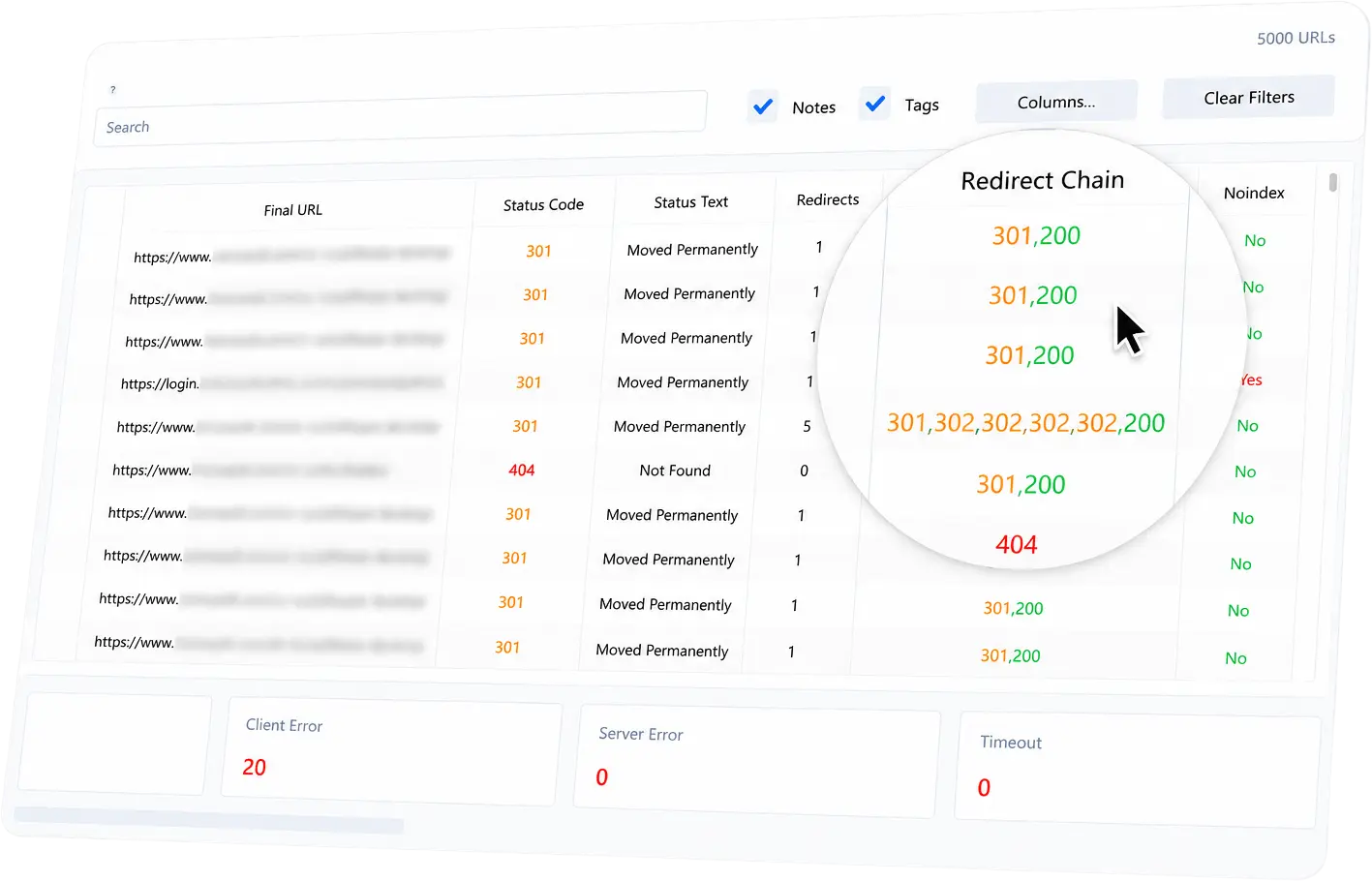
HTTP status codes tell you how a server responded when a URL was requested. For SEO audits, migrations and website QA, they help identify pages that are working, redirected, missing, blocked or failing.
URL Verifier Pro checks status codes in bulk and adds context such as final URLs, redirect chains, response times, content types, headers and errors, making it easier to understand what is happening across a large URL list.
2xx success responses
A 200 OK response means the server returned the page or resource successfully. For most important pages, this is usually the expected result.
Not every 200 is automatically good, though. During an audit, also check whether the page has the expected final URL, canonical URL, metadata, robots directives and content type.
3xx redirects
301 and 308 are commonly used for permanent redirects. They are often used during migrations, HTTP to HTTPS moves, domain changes and canonical URL cleanup.
302 and 307 are temporary redirects. They can be valid for temporary campaigns, login flows or short-term routing, but they should be reviewed if found in migration checks or canonical URL audits.
When reviewing redirects, do not look only at the first status code. Check the final URL, final status, redirect count and full redirect chain.
4xx client errors
A 403 Forbidden means the request was refused. It may be caused by permissions, firewall rules, bot protection, missing authentication or server configuration.
A 404 Not Found means the URL does not exist at that location.
A 410 Gone means the URL has intentionally been removed.
A 429 Too Many Requests means the server is rate limiting requests. Slowing the scan, lowering concurrency, adding delays, using a suitable User-Agent or adjusting backoff may help where appropriate.
5xx server errors
500, 502, 503 and similar responses usually point to server-side problems. These should be investigated, especially if they affect important landing pages, sitemap URLs or many URLs at once.
A temporary 503 may appear during maintenance or overload, but repeated 5xx responses are a strong signal that something needs attention.
How URL Verifier Pro helps
URL Verifier Pro can:
-
Check status codes in bulk.
-
Follow redirects up to your configured limit.
-
Record final URLs and redirect chains.
-
Detect timeouts, proxy failures, redirect loops and excessive redirects.
-
Surface some block-page and challenge signals where visible from response data.
-
Filter by status code, scan status, content type or tag.
-
Export visible columns to CSV.
Suggested audit process
-
Import or discover URLs.
-
Run the scan.
-
Filter
4xxresults and export them. -
Filter
5xxresults and export them. -
Filter redirects and review final URLs.
-
Tag priority issues for follow-up.
-
Save the session so you can return to the same audit later.