

How to Check Redirect Chains and Final URLs
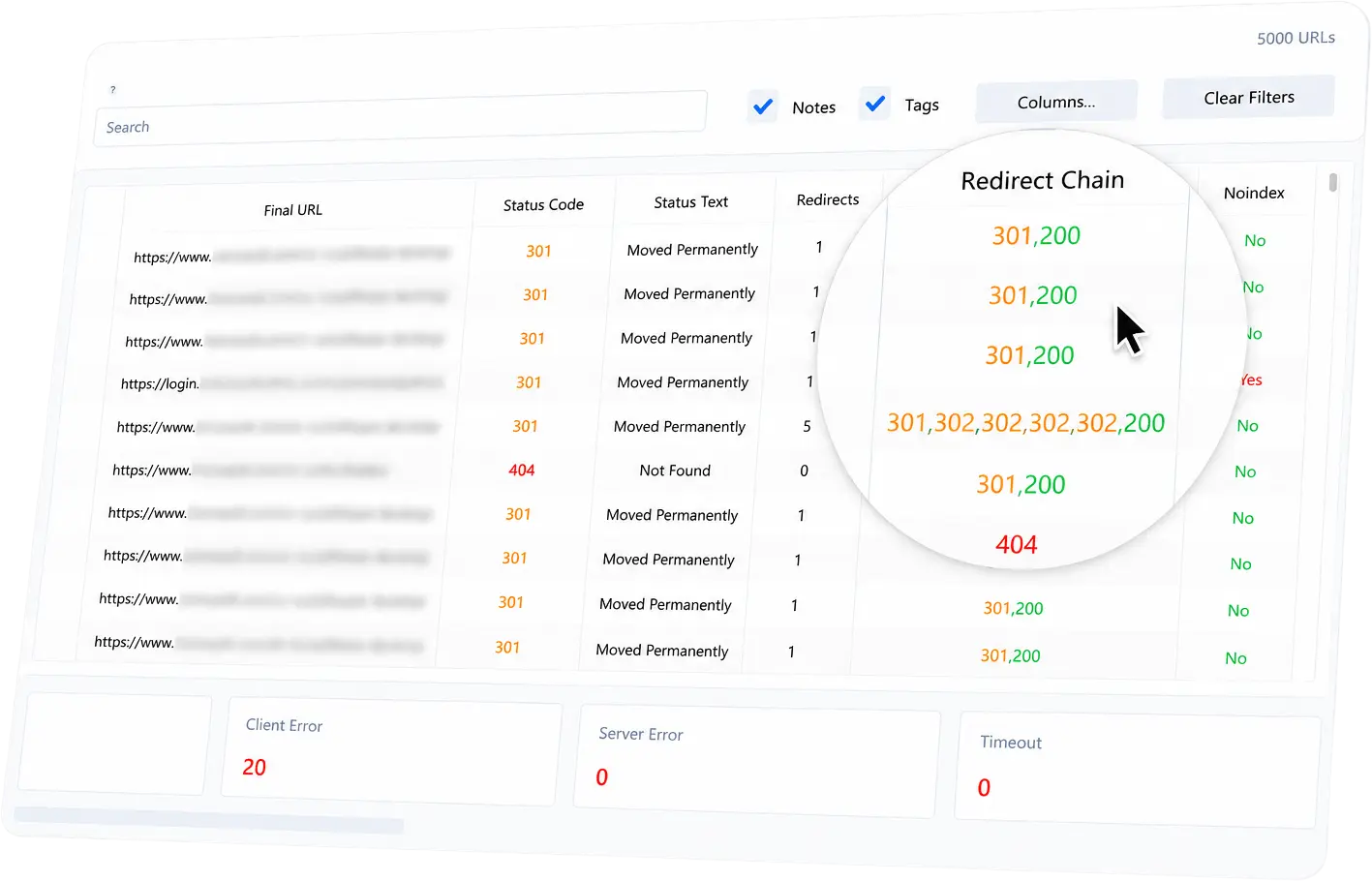
A redirect chain happens when one URL redirects to another URL, which then redirects again before reaching the final destination. Some redirects are normal, but long or unnecessary chains can slow requests, complicate migrations and hide incorrect destinations.
URL Verifier Pro follows redirects up to your configured limit and records the original URL, final URL, status code, final status, redirect count, redirect chain, Location header and error details for loops or excessive redirects.
Basic workflow
-
Import the URLs you want to check.
-
Choose a redirect limit that matches your audit. A low limit helps reveal excessive redirects quickly, while a higher limit can help diagnose complicated redirect paths.
-
Run the scan.
-
Filter rows that contain redirects.
-
Sort by redirect count to find the longest chains.
-
Review the Final URL column to confirm each URL ends in the correct place.
-
Export rows where the redirect count is high, the final status is not successful or the final URL is unexpected.
Common redirect chain examples
Common patterns include:
-
http://example.com/pageredirecting tohttps://example.com/page, then tohttps://www.example.com/page. -
A URL without a trailing slash redirecting to the trailing slash version.
-
An old URL redirecting to an intermediate migration URL before reaching the final URL.
-
A product page redirecting to a category page, then to the homepage.
-
A temporary redirect being used where a permanent redirect was expected.
What to fix
During a redirect audit, consider fixing:
-
Old URLs that do not redirect.
-
Redirect loops.
-
Excessively long chains.
-
Temporary redirects that should be permanent.
-
Internal links, canonical URLs and sitemap URLs that point to redirecting URLs instead of final URLs.
-
Redirects that end on irrelevant pages or the homepage without a clear reason.
How to report redirect issues
Before exporting, show only the columns needed for the report. A useful redirect export often includes:
-
Original URL
-
Final URL
-
Status code
-
Final status
-
Redirect count
-
Redirect chain
-
Response time
-
Location header
-
Notes
-
Tags
Use custom tags such as chain, wrong destination, loop, temporary redirect or fixed to organise work and make follow-up easier.