

How to Audit Redirects During a Website Migration
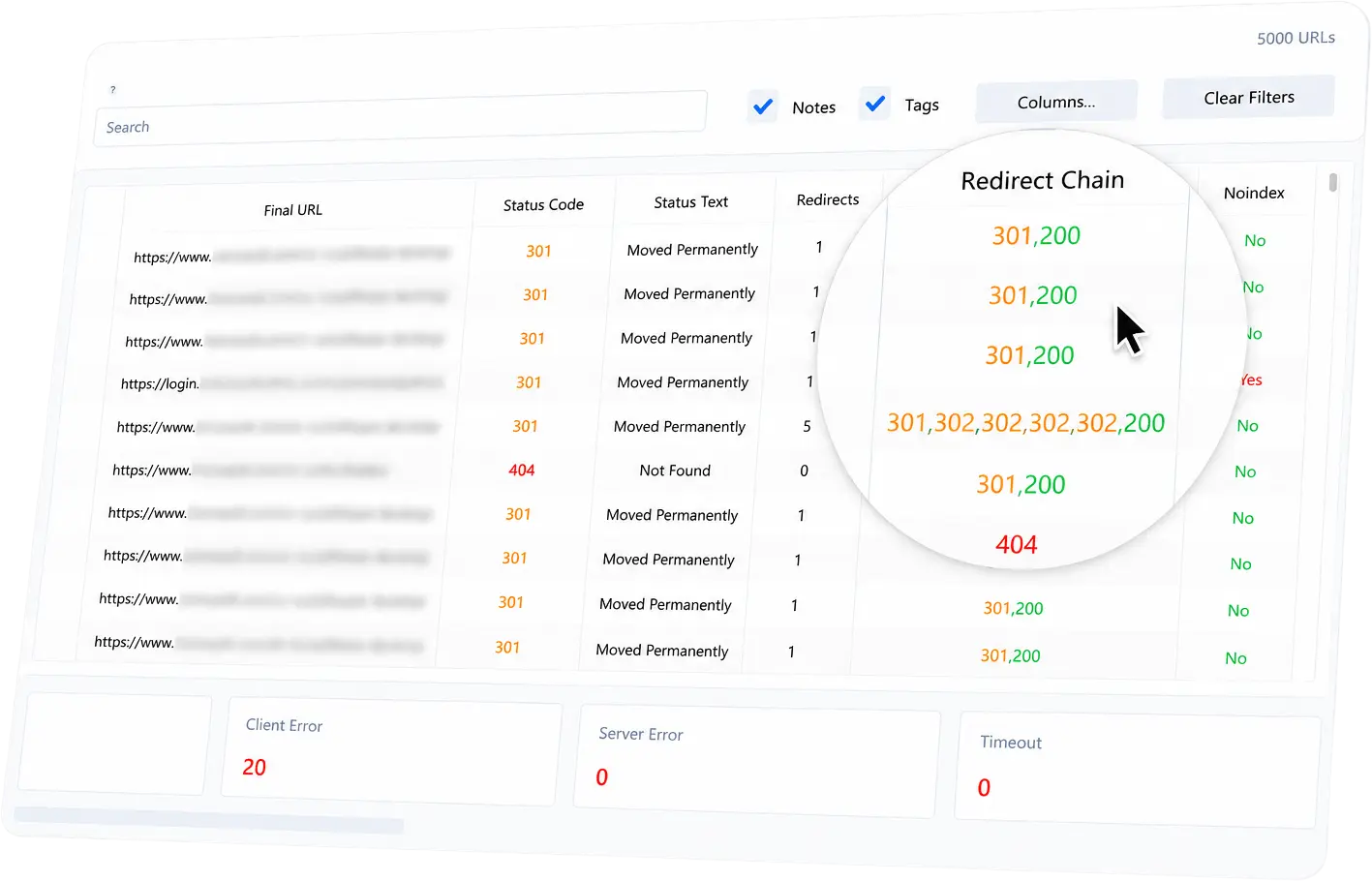
Redirect auditing is one of the most important checks in a website migration. When URLs change, old pages should usually redirect to the most relevant new pages. If redirects are missing, chained, temporary or pointed at the wrong destination, users can hit broken pages and search engines may receive confusing signals.
The bulk redirect checker in URL Verifier Pro helps you review redirects in bulk. It records the original URL, status code, final URL, final status, redirect count and redirect chain, so you can quickly see where each URL actually ends up.
Recommended migration workflow
-
Prepare your old URL list. Useful sources include the current XML sitemap, crawler exports, analytics landing pages, backlink data, CMS exports, log files or your redirect mapping spreadsheet.
-
Import the list into URL Verifier Pro by pasting the URLs or importing a TXT/CSV file.
-
Set an appropriate redirect limit. A lower limit can help surface excessive chains quickly, while a higher limit can help diagnose complicated paths.
-
Run the scan.
-
Filter for redirecting URLs, usually rows with
3xxstatus codes or a redirect count above zero. -
Review the Final URL column and confirm each old URL reaches the intended new page.
-
Review the redirect count. One clean hop is usually preferable to several chained redirects.
-
Inspect the redirect chain to find temporary redirects, loops, unexpected hops or redirects through irrelevant pages.
-
Filter failed,
404,410and5xxrows separately. -
Export focused CSV reports for developers or migration stakeholders.
Common redirect problems
During migrations, look for:
-
Old URLs returning
404instead of redirecting. -
Old URLs redirecting to the homepage instead of the closest relevant page.
-
Long chains such as
301 > 301 > 301 > 200. -
Temporary redirects where permanent redirects were expected.
-
HTTP to HTTPS redirects followed by another redirect for www/non-www or trailing slash changes.
-
Redirect loops that never reach a final destination.
-
Query-string URLs behaving differently than expected.
-
Inconsistent redirect behaviour across www, non-www, HTTP and HTTPS variants.
Columns to include in a redirect audit
For migration QA, a focused export should usually include:
-
Original URL
-
Final URL
-
Scan status
-
Status code
-
Final status
-
Redirect count
-
Redirect chain
-
Response time
-
Error details
-
Notes
-
Tags
Organising redirect work
Use custom tags to group URLs by template, section, priority, issue type or fix status. Add notes to explain expected destinations, developer actions or client decisions. Save the session so the audit can be reopened later without rebuilding the URL list.
After fixes are made, rescan only failed, selected or tagged URLs instead of rerunning the entire list. Then export a clean report showing the remaining redirect issues.