

How to Audit Page Titles and Meta Descriptions in Bulk
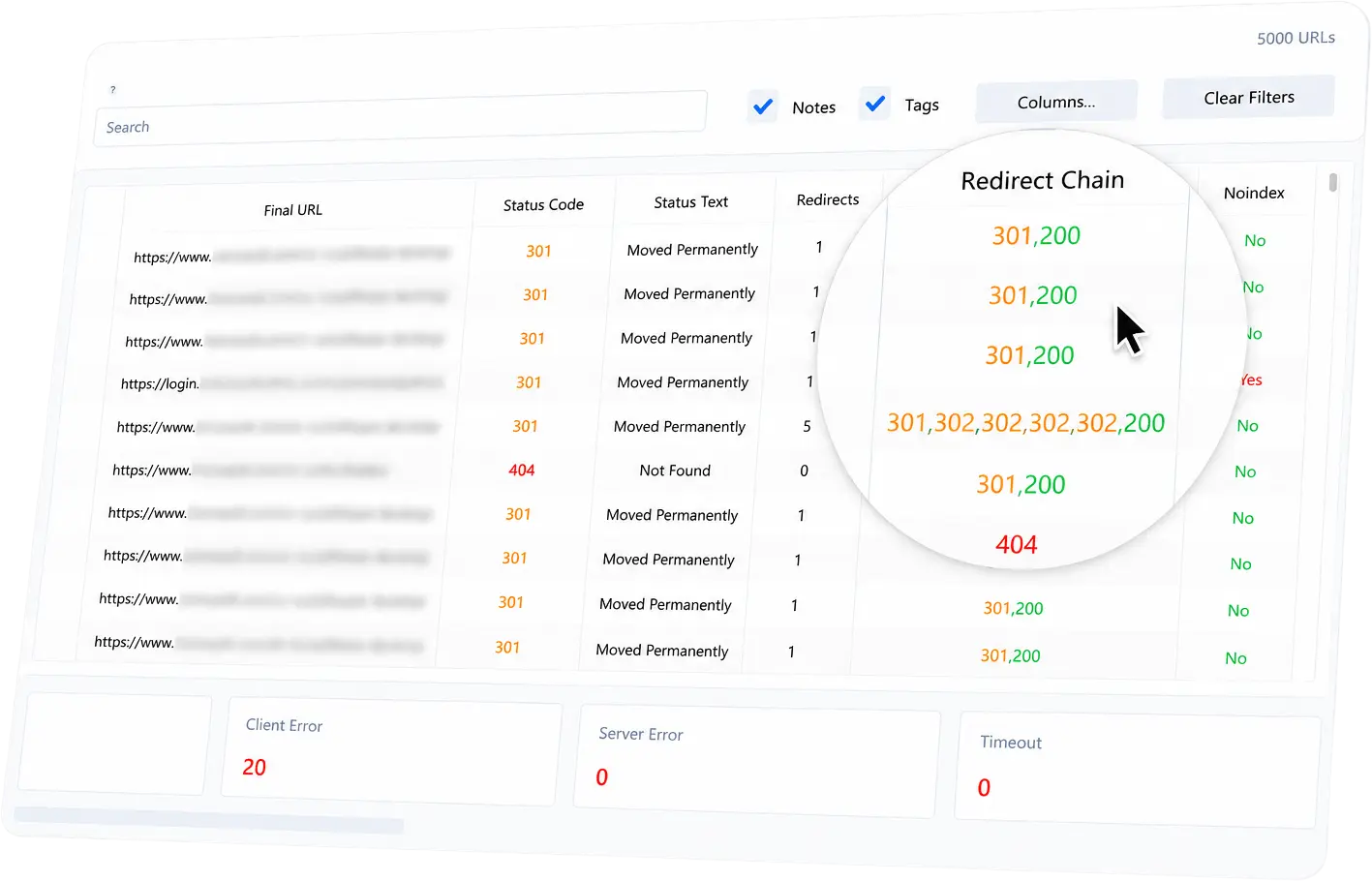
Page titles and meta descriptions are easy to break during redesigns, migrations, CMS updates and template changes. A bulk metadata audit helps you find missing, duplicated, unexpected or poorly configured fields across a large set of URLs.
URL Verifier Pro can extract page metadata while checking status codes and redirects. It reads a bounded prefix of the HTML response for speed instead of downloading entire pages, and it can handle gzip and deflate compressed HTML responses.
Metadata fields URL Verifier Pro can extract
Depending on the page response, URL Verifier Pro can capture:
-
Page title
-
Meta description
-
Meta keywords
-
Canonical URL
-
Robots meta tag
-
Noindex flag
-
Nofollow flag
-
Open Graph title
-
Open Graph description
-
Open Graph image
-
Open Graph URL
-
X/Twitter card metadata
-
Hreflang alternates
-
Canonical URL from the HTTP Link header where available
Metadata audit workflow
-
Import or discover the URLs you want to check.
-
Run a scan with metadata columns enabled.
-
Show the title, meta description, canonical, robots, Open Graph and hreflang columns you want to review.
-
Sort or filter rows to find missing values.
-
Use search to find duplicated template text, staging values or old brand names.
-
Add notes or custom tags for pages that need content, SEO or developer review.
-
Export the visible columns to CSV.
Common issues to look for
Bulk metadata checks can help find:
-
Missing title tags.
-
Missing meta descriptions.
-
Duplicate titles across many pages.
-
Template text repeated across descriptions.
-
Noindex accidentally left on live pages.
-
Canonical URLs pointing to the wrong destination.
-
Open Graph data missing on important landing pages.
-
Hreflang alternates missing after a migration.
-
Metadata appearing on redirecting or non-canonical URLs.
Important limitation
URL Verifier Pro does not render JavaScript. If a site injects metadata only after page load, direct HTTP extraction may not see it. This is still valuable for technical SEO audits because it shows what is present in the initial HTML response returned by the server.